Guides
Waterproofing a terrace over the existing tiles: a real job with Ultraflex and an anti-slip finish
Impermyna5 min read
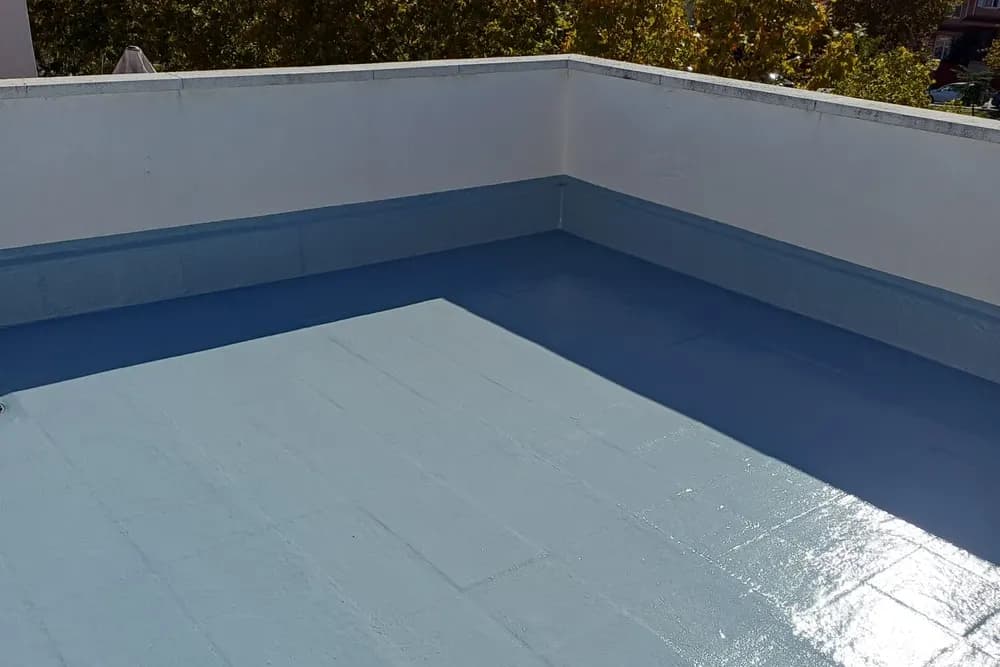
On this job we waterproofed a terrace over the existing tiled floor: no tiles removed, no rubble and no new floor to lay. The system is Ultraflex liquid polyurethane membrane, applied cold, with an anti-slip finish so the terrace is safe to walk on. The photos in this article are from this job, with the membrane already applied.
A tiled terrace, the most common case
It’s the terrace many homes and residential buildings have: a tiled floor, parapet walls around it, drains and the odd obstacle. This one had a side passage between two walls, a pillar and the outdoor air-conditioning unit.
On terraces like this, water usually finds its way in through three places:
- The joints between tiles, which open up over the years and let water through to the home below.
- The junctions between the floor and the parapets and walls.
- Poorly finished drains.
There are two ways to fix it: lift the tiles, waterproof and re-tile, or waterproof over the top with a liquid membrane. When the tiles are sound, the second avoids construction work.
Why waterproof over the tiled floor
- No construction work. The floor isn’t lifted: no rubble, dust or demolition noise, and the work can be done while the home is lived in.
- One continuous, joint-free layer. The membrane goes on as a liquid and forms a single layer over the tiles. The joints between tiles, where water usually gets in, are covered.
- It adapts to what’s there. Parapets, corners, drains and pillars are handled without overlaps, which is where sheet membranes usually fail.
- The existing floor becomes the base. There’s no new paving to buy or lay: the membrane’s finish is the surface you walk on.
When it works (and when it doesn’t)
Waterproofing over tiles works if the substrate is sound, clean and dry. Before starting, we check:
- That there are no hollow or loose tiles. If there are, they’re fixed first: the membrane would follow their movement.
- Cracks and weak points, which are repaired.
- Falls and drains. If the terrace ponds, that has to be solved before waterproofing.
We go into more detail in our guide to no-demolition terrace waterproofing.
How the Ultraflex system is applied over tiles
The work on a terrace like this follows this order:
- Cleaning and repairing the substrate. The tiles are cleaned thoroughly and cracks and weak points are repaired.
- Primer. It prepares the surface so the membrane bonds well; it’s chosen to suit the substrate.
- Reinforcing the critical details. Junctions with parapets, corners, drains and pillars, with reinforcing geotextile where needed.
- Ultraflex membrane. It’s applied cold and forms a continuous layer that runs up the parapets to seal the junction between floor and wall.
- Anti-slip finish. The final coat leaves a walkable surface with grip.
What the photos show
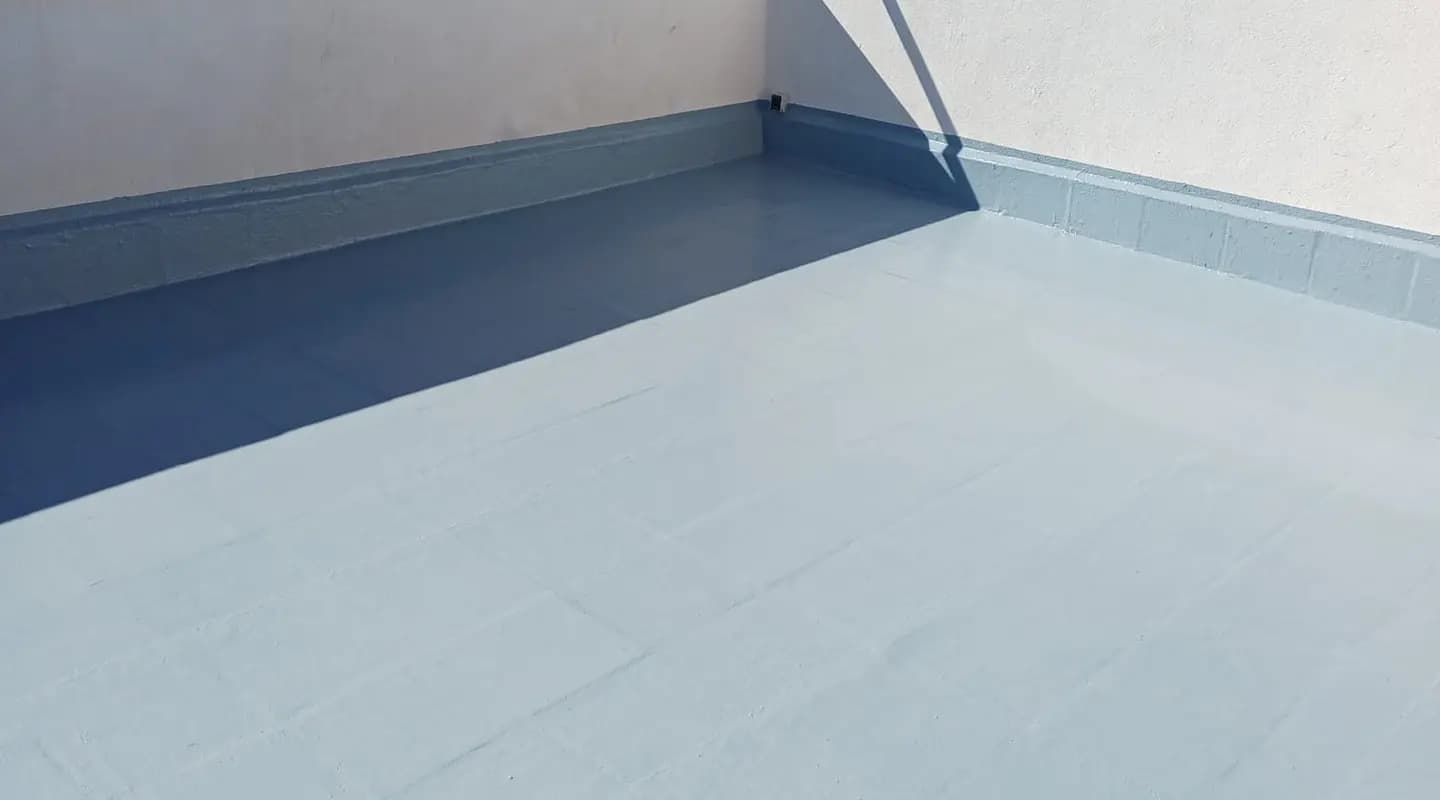 The tile grid shows through the membrane: the tiled floor is still underneath, not lifted
Look closely at the floor and you can see the grid of the tiles. It’s the clearest proof that nothing was lifted: the membrane covers the tiled floor and joins every tile into a single layer.
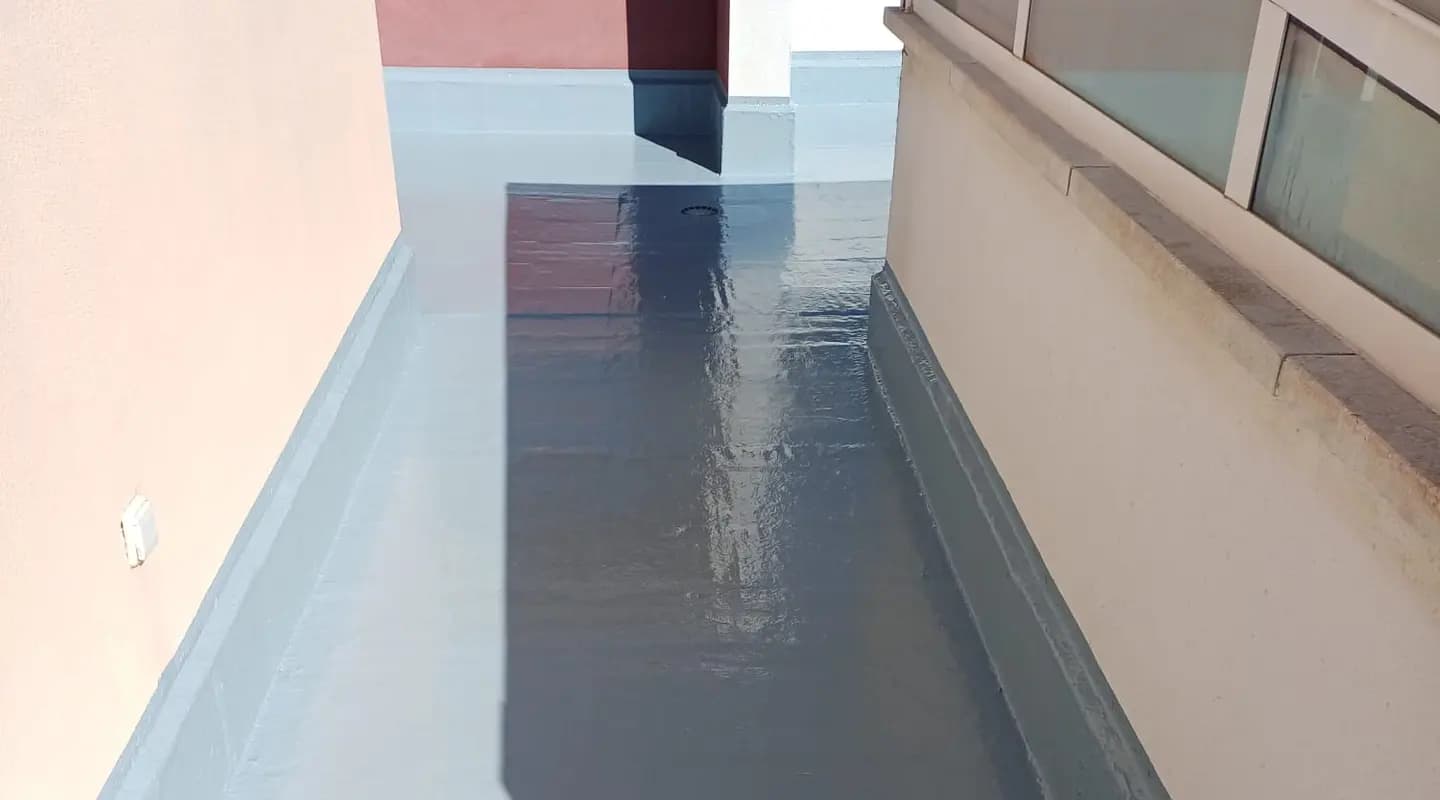 Side passage of the terrace: the membrane runs up both walls as a continuous upstand
In the side passage, the membrane runs up both walls as a continuous upstand. The junction between floor and wall is, along with the drains, one of the places where a terrace leaks most; here it sits inside the same layer.
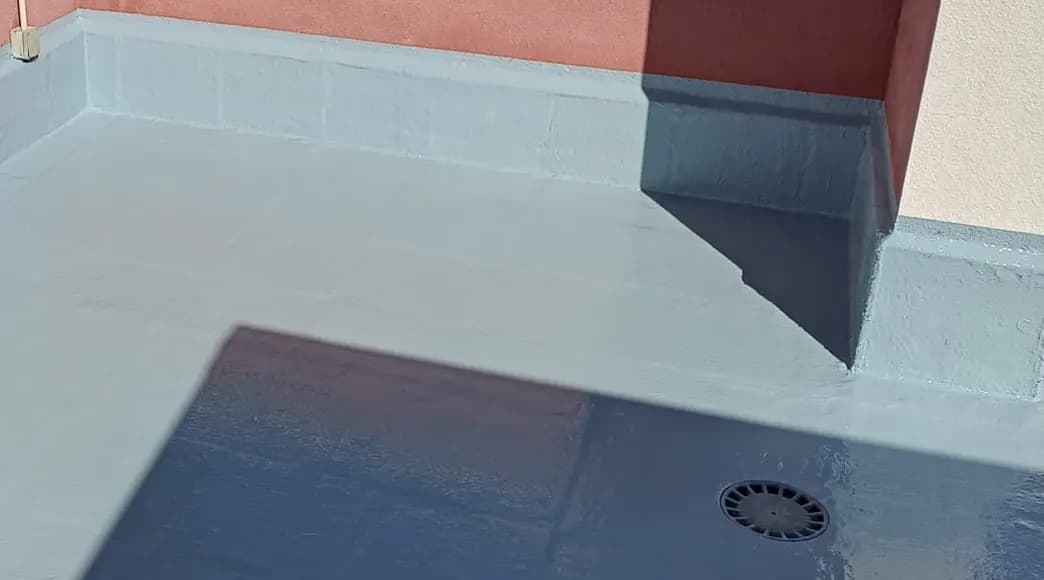 Parapet corner with the drain finished and the membrane around it
In the parapet corner, the membrane turns the corner without cuts, and the drain is finished with the membrane around it.
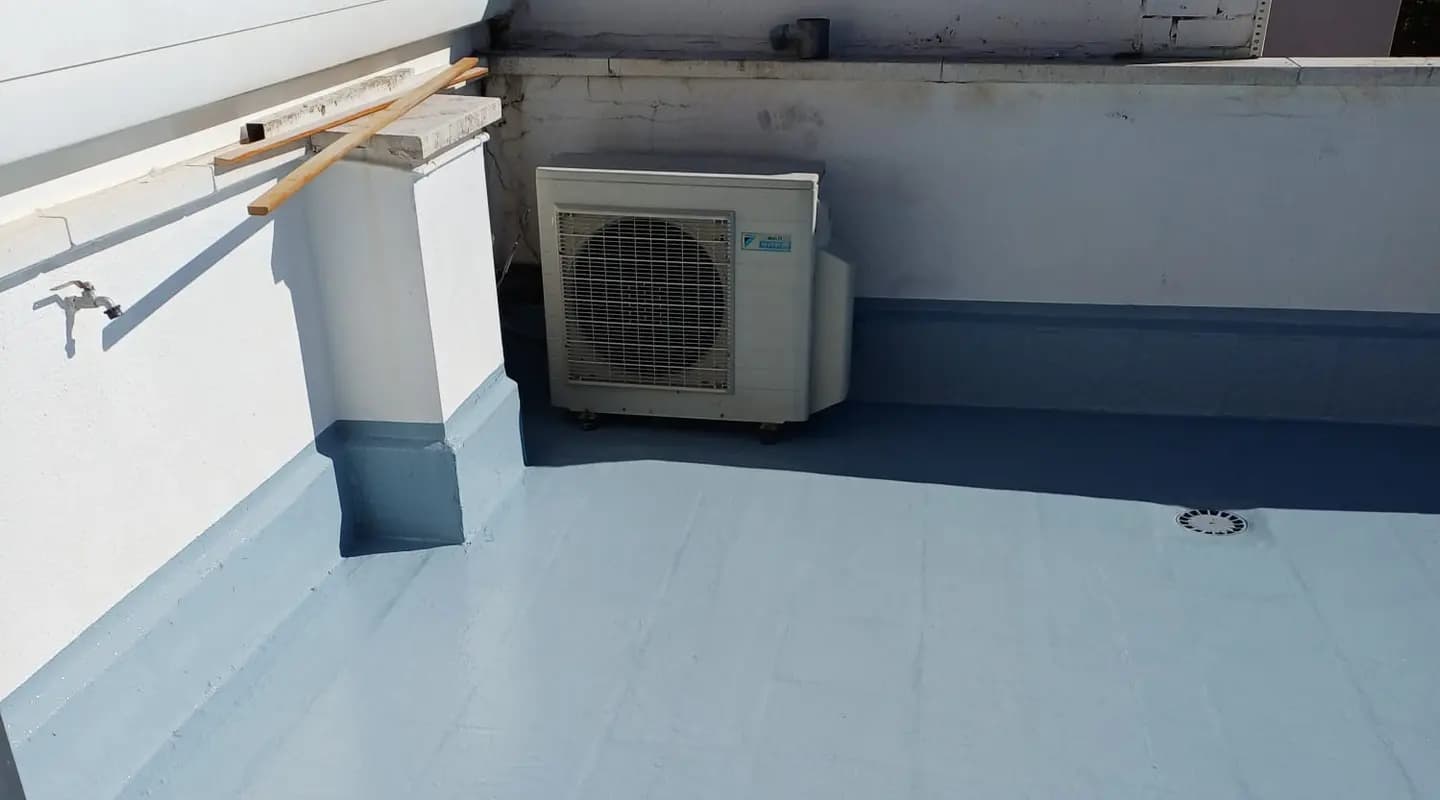 The pillar and the outdoor air-conditioning unit, with the membrane around them
Real terraces have obstacles. Here, a pillar and the outdoor air-conditioning unit: the liquid membrane wraps around the pillar and reaches the unit without overlaps.
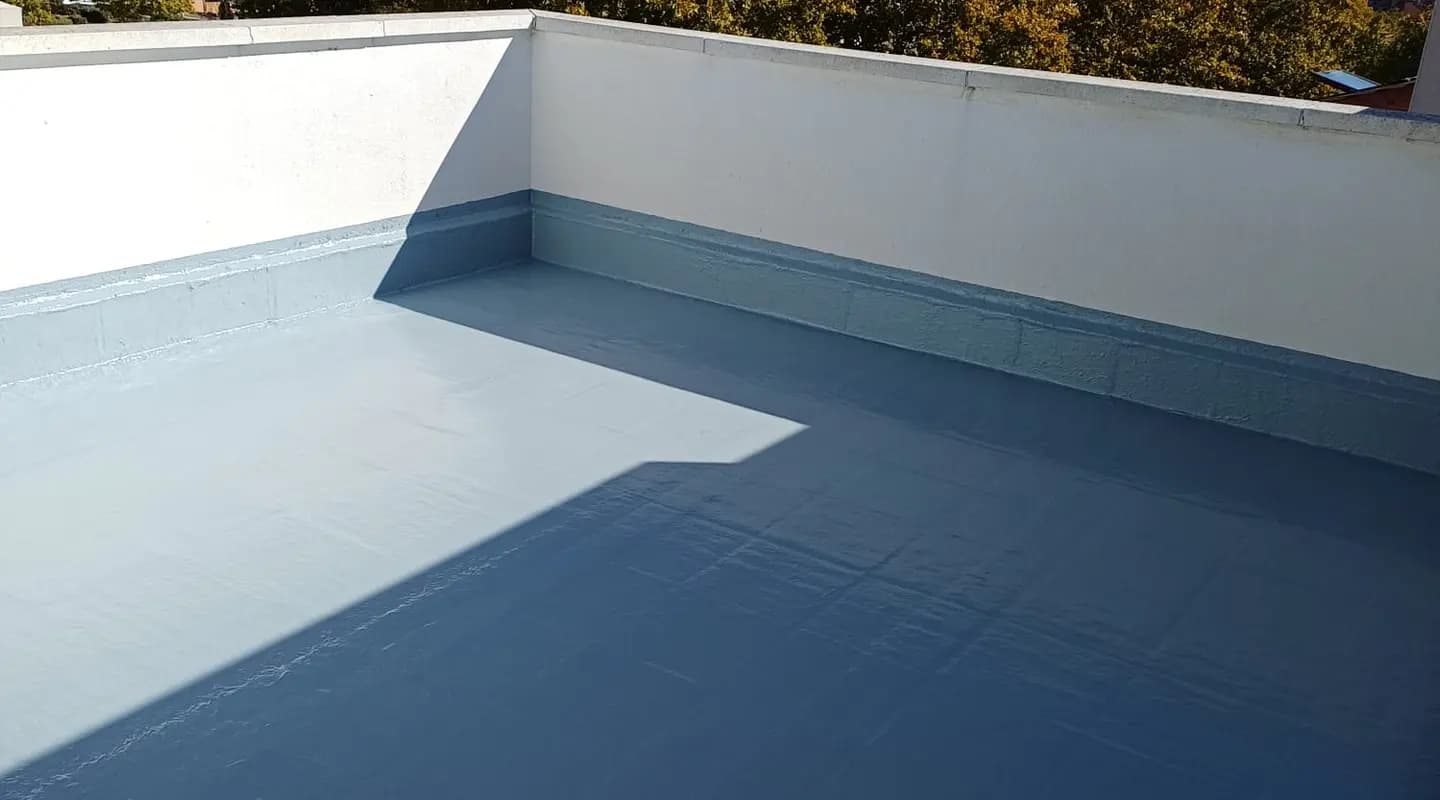 The finished terrace: a single surface, with the membrane turned up the parapets
The result is a single, joint-free surface, with the membrane turned up the parapets. Normal foot traffic resumes a few days after the final coat.
Why the anti-slip finish
A terrace gets walked on, often when it’s wet: after rain, when watering plants or hanging out the washing. The anti-slip finish gives grip underfoot on the membrane, also on rooftops used as walkways or drying areas.
It’s the final coat of the system and doesn’t change what matters: underneath is still the continuous membrane that keeps the water out.
Lifting the floor or waterproofing over it
| Lifting the tiles | Over the top, with Ultraflex | |
|---|---|---|
| Rubble and dust | Yes: there’s demolition | No: the work is done over the tiles |
| New floor | Has to be laid | Not needed: the finish is the floor |
| Lived-in home | Construction disruption | Work can go ahead without disruption |
| When it makes sense | Failing substrate or falls to redo | Sound tiles and a terrace that drains well |
Warranty
Like all our work, this waterproofing comes with a written warranty of up to 25 years.
Is your tiled terrace leaking?
If the tiles are sound, you may not need to lift them. At Impermyna we inspect your terrace in Madrid or Toledo and tell you whether it can be waterproofed over the top, with a detailed quote and a written warranty. Here’s how we approach terrace waterproofing in Madrid, and you’ll find more of our jobs on the work performed page.
- #waterproofing over tiles
- #waterproofing without removing tiles
- #ultraflex liquid membrane
- #anti-slip finish
- #walkable terrace
- #case study