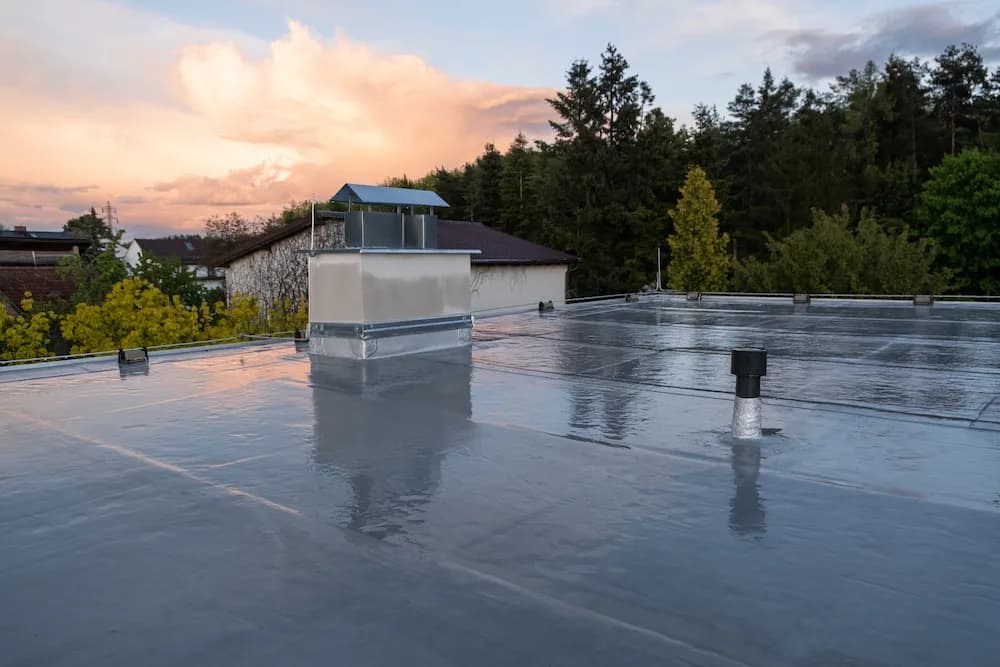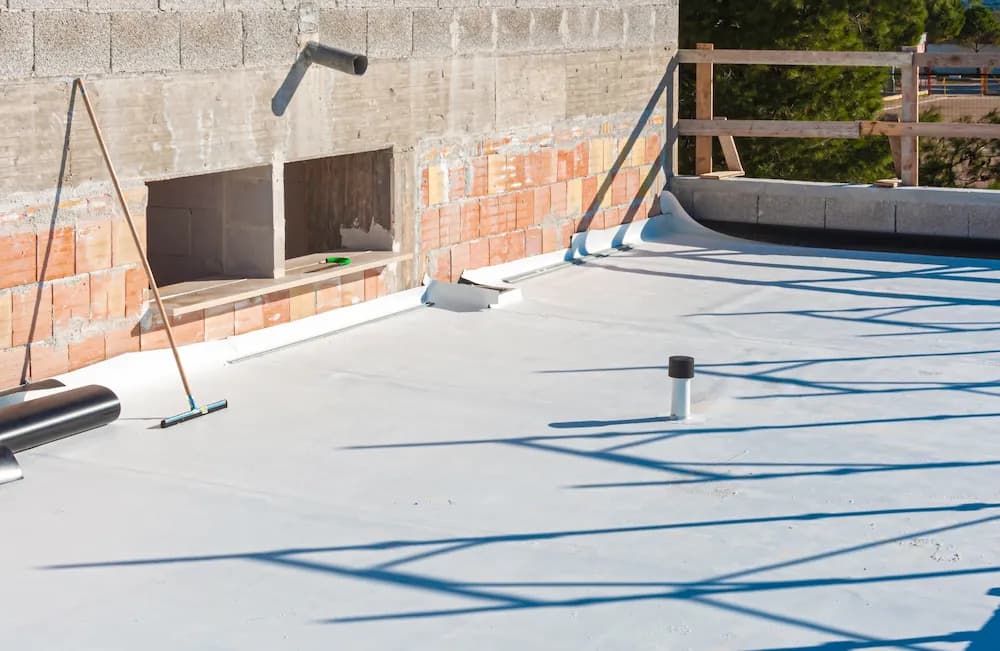
Expansion joint waterproofing is one of the most common sources of leaks on flat roofs and terraces: even if the membrane is fine, a poorly detailed joint lets water in, opens with building movement, and causes recurring damp patches.
What an expansion joint is (and why it leaks)
Expansion joints (structural movement joints) allow a building to “move” due to temperature changes, shrinkage and minor structural movement. Leaks typically occur when:
- The sealant cracks, shrinks or debonds.
- The joint is filled with mortar (it cracks and opens to water).
- The waterproofing is not properly “bridged” with an elastic system.
- Water ponds due to inadequate falls or poor drainage.
If the leak follows a straight line, repeats along a building axis, or matches a change between slabs/sections, the joint is a prime suspect.
How to spot a joint-related leak (typical signs)
On roofs and rooftop decks you may see:
- A linear crack in the paving or protective layer.
- Interior stains aligned below the same line (top-floor flats, corridors, areas under the roof).
- Dampness that worsens with rain and wind and returns after “patch” repairs.
- Debonded skirtings, cracks at parapets, or failures near junctions.
Common mistakes when “fixing” expansion joints
- Covering with cement or rigid filler: it fails quickly and reopens.
- Painting over the area without proper preparation: water enters at the edges.
- Ignoring joint movement (wrong joint geometry): the sealant tears.
- Not addressing drainage: ponding accelerates failure.
Typical systems for waterproofing expansion joints
The right option depends on expected movement, substrate condition, and whether the area is walkable.
1) Elastic band + membrane (a true “bridge” detail)
An elastic reinforcement band (rubber/EPDM or similar) is bonded on both sides of the joint and integrated with the existing waterproofing.
- Pros: accommodates movement and ties into sheet or liquid systems.
- Best for: roofs/terraces with continuous membranes.
2) Expansion joint cover profiles (prefabricated systems)
Purpose-made joint covers (aluminium + elastomer, PVC, etc.) protect the opening and manage water.
- Pros: robust; some models are serviceable/replaceable.
- Best for: higher movement joints or walkable finishes.
3) Elastic sealant (PU/MS) with backer rod
Where appropriate, use a backer rod to control depth and apply a suitable elastic sealant.
- Pros: fast and effective when correctly sized.
- Limitation: it won’t compensate for a failing surrounding waterproofing system.
4) Liquid-applied resins with reinforced joint detail
With liquid systems (polyurethane, PMMA, etc.), the joint is reinforced with mesh/band and additional coats.
- Pros: continuity and strong detailing.
- Best for: refurbishments where full removal isn’t feasible, if the substrate allows.
Which solution to choose (quick guide)
- Walkable communal terrace: joint cover profile + proper integration with waterproofing and paving.
- Non-walkable flat roof with a membrane: compatible elastic band + correct overlaps.
- Narrow, stable joint (low movement): correctly dimensioned elastic sealant + protection.
- Recurring leaks and aged membrane: fix the joint and assess adjacent areas for refurbishment.
Execution details that make or break the repair
- Cleaning and preparation: dry substrate, no dust, no loose material.
- Primer where the system requires it.
- Correct joint geometry (width/depth) and backer rod use.
- Material compatibility (sealant, band, sheet membrane, resin).
- Proper terminations at parapets, drains and changes of plane.
- Post-works verification (and watertightness testing where feasible).
Homeowners associations in Madrid: why early action matters
In Madrid, temperature swings and periodic maintenance traffic (antennas, HVAC units) often stress rooftop joints. For homeowners associations, a poorly detailed joint can trigger repeated claims and a chain of “temporary fixes” affecting top-floor apartments.
When to call a professional
- If the joint runs across multiple areas and the leak returns every season.
- If paving/protection layers must be lifted and reinstated.
- If you need guaranteed compatibility with the existing waterproofing.
A proper joint repair isn’t just “sealing”: it must allow movement while staying watertight.
Need to waterproof an expansion joint?
At Impermyna we assess the joint, the surrounding waterproofing and drainage to propose a durable solution—especially for communal roofs and terraces in Madrid and Toledo. If you’d like, we can provide an on-site assessment and a no-obligation quote.
Need help with your waterproofing project?
Our team can review your case and recommend the best long-term solution.
Request a quote