Finding the source of a water leak is the most important step before waterproofing or repairing anything: condensation, rain infiltration, and a plumbing leak look similar at first, but they require different fixes. This quick guide helps you identify the cause with clear signs and simple checks—so you don’t waste money on the wrong repair.
1) Condensation: moisture coming from indoors
Condensation happens when humid indoor air cools down on cold surfaces.
Typical signs
- Water droplets on windows, cold corners, or cold walls.
- Black mould on silicone joints, behind furniture, or on bathroom ceilings.
- Worse in winter or with high occupancy (cooking, showers, drying clothes).
- Not linked to rainfall.
Quick checks
- Ventilate intensively for 10–15 minutes daily for several days: if it improves, it points to condensation.
- Use a hygrometer: if you’re often above 60–65% RH, condensation risk is high.
What usually works
- Better ventilation (extract fans, vents) and humidity control.
- Reducing thermal bridges / improving insulation at cold spots.
If mould keeps returning but you don’t see yellow/brown rings or salt deposits, it’s often condensation rather than a roof leak.
2) Rain infiltration: water entering from outside
Here, water enters through the building envelope: roof, terrace, façade, junctions, parapets, drains.
Typical signs
- Yellow/brown stains on ceilings or walls, bubbling paint.
- Drips or streaks after rain events or thawing.
- Often worse with wind-driven rain or ponding water.
- The stain may be far from the entry point (water travels through layers).
Secondary keywords: “terrace leaks” and “flat roof leaks”
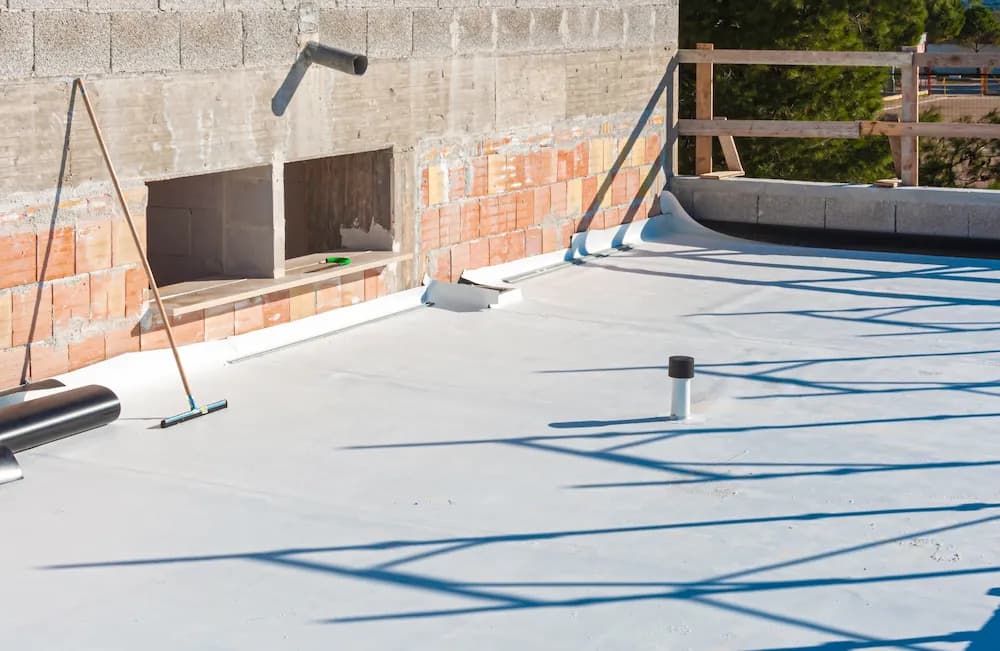
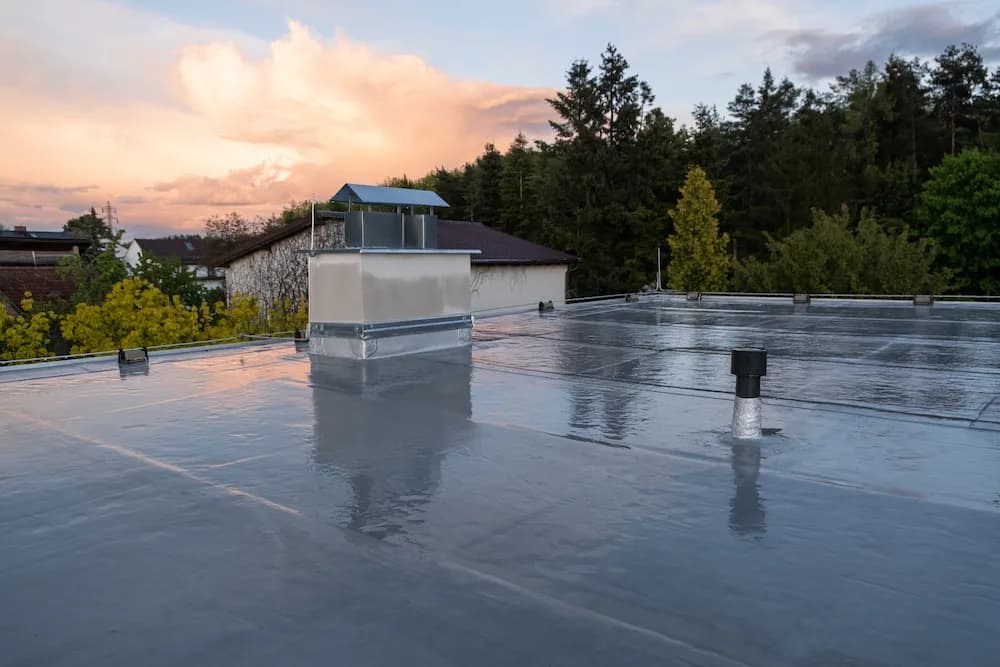
With terrace leaks and flat roof leaks, the most common weak points are:
- Drains and overflows (blockages, poor bonding to the membrane).
- Joints and junctions at parapets, chimneys, rooftop rooms.
- Cracks in tiles/paving, movement joints, degraded sealants.
Quick checks (non-destructive)
- Rain correlation: note the date/time of rainfall and when the stain appears.
- Outdoor visual inspection: look for cracks, open joints, loose elements, failed sealants.
- Check drains: leaves/sludge can cause ponding and force water into weak details.
Avoid “flood testing” a terrace as a DIY check—it can worsen damage or affect neighbours.
3) Plumbing or service leak: continuous water, independent of weather
This may come from supply lines, heating, hot water, waste pipes, or downpipes.
Typical signs
- The stain grows even when it hasn’t rained.
- Constant dampness, continuous dripping, or water noise.
- Unusual increase in meter consumption.
- With waste pipes: odours and damp near shafts or downpipes.
Quick checks
- Turn off all taps/appliances and watch the meter: if it still moves, you likely have a leak.
- In multi-storey buildings, check if bathrooms/kitchens align vertically near the affected area.
4) A simple step-by-step diagnosis
A practical method for homeowners and property managers:
- Step 1: timing pattern: after rain, after use (shower), or all the time?
- Step 2: location: under a terrace/roof? near a pipe shaft? at an external corner?
- Step 3: stain type:
- Surface black mould: more likely condensation.
- Yellow/brown ring and soft plaster: more likely infiltration.
- Very localised, persistent damp: possible plumbing leak.
- Step 4: external checks (if safe): drains, joints, parapets, cracks.
5) Common scenario in Madrid: apartment buildings and HOAs
In Madrid, many apartment buildings/HOAs see leaks after heavy rain and temperature swings. Often the real cause isn’t “where the stain is”, but a failed roof detail, a clogged drain, or an aged joint. A professional diagnosis helps avoid repeated patch repairs that don’t solve the root problem.
6) When to call a professional
Get professional help if:
- The stain grows quickly or there’s electrical risk.
- Multiple units or common areas are affected.
- There’s no clear pattern and water may be travelling through layers.
- You suspect a waterproofing failure (roof/terrace) or pressurised water.
At Impermyna, we carry out on-site diagnostics and recommend the right solution (local repairs, resealing, waterproofing refurbishment, or drainage improvements), tailored to Madrid and Toledo.
Quick checklist (to share with a technician)
- Photos of the stain (close-up and wide) and when it started.
- Whether it rained/snowed and how intense it was.
- Exact location (sketch or reference) and nearby services.
- Any abnormal meter readings.
If you tell us where the damp appears and when it happens, we can help you narrow down the most likely cause and the best next step—no obligation.
Need help with your waterproofing project?
Our team can review your case and recommend the best long-term solution.
Request a quote