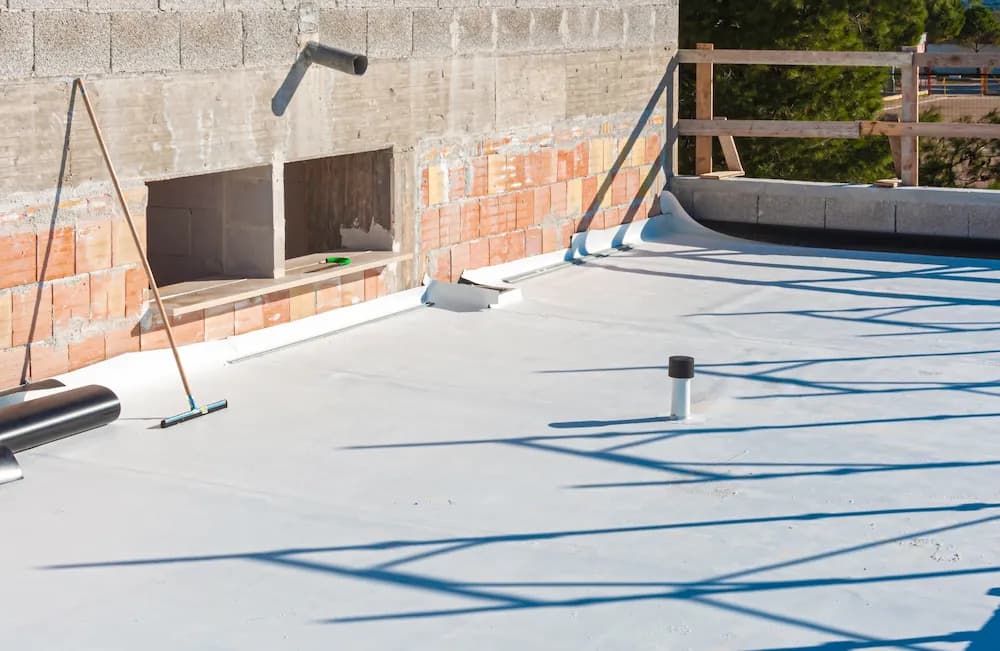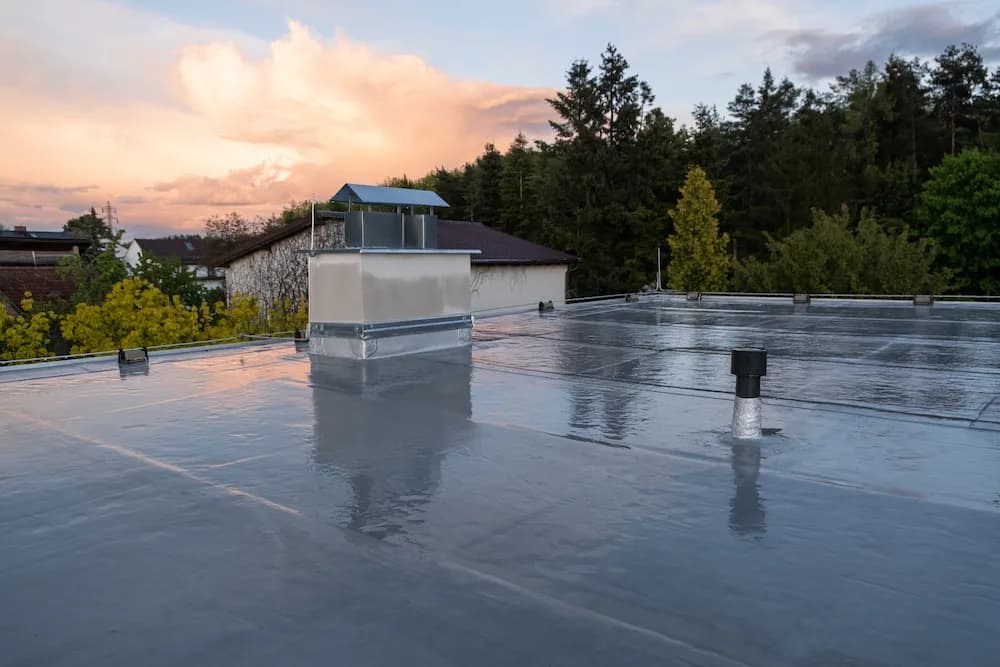
Gravel-ballasted flat roof waterproofing is very common in residential buildings and HOAs because the gravel protects the membrane from UV exposure and mechanical damage. The downside is that when a leak appears, water can travel under the gravel and insulation, so the interior stain often doesn’t match the real entry point.
What is a gravel-ballasted flat roof and why does it fail?
In a ballasted roof, the waterproofing layer is covered with gravel that acts as ballast and UV protection. Failures usually come from:
- Poorly detailed drains and transitions (parapets, penetrations, roof upstands).
- Insufficient slope and ponding areas that accelerate aging.
- Punctures or cuts from later works (HVAC, antennas, new cabling, etc.).
- Substrate movement and untreated expansion joints.
- Dirty gravel that clogs outlets and causes overflow.
Typical leak symptoms on gravel roofs
- Damp spots showing up days after rainfall.
- Stains that seem to “move” from one area to another.
- Overflow at parapets during heavy storms (slow or blocked drains).
- Silt, sludge, or vegetation around outlets.
On ballasted roofs, “patching where it drips” often fails—finding the true entry point is key.
How a proper diagnosis is done (without removing all the gravel)
A professional assessment typically combines:
- Inspection of critical details: drains, overflows, parapets, penetrations.
- Targeted test openings (lifting gravel in specific zones) to check membrane condition.
- Sectional flood testing when feasible.
- Moisture detection to narrow down water paths—especially useful for HOAs.
Waterproofing solutions for gravel-ballasted flat roofs
The right approach depends on the condition of the existing membrane and building requirements.
1) Localized repair (when the membrane is mostly sound)
Suitable when the system is generally in good shape and the issue is concentrated.
- Replacing/upgrading roof drains and adding reinforced perimeters.
- Strengthening parapet transitions and service penetrations.
- Repairing punctures and mechanical damage.
When it’s not a good idea: widespread deterioration, multiple weak points, or an end-of-life membrane.
2) Full refurbishment while keeping a “ballasted” build-up
When aging or execution defects are general, the most durable option is often rebuilding the system:
- Removing gravel and loose layers.
- Correcting slopes if ponding exists.
- Installing a new waterproofing layer (e.g., bituminous membranes or synthetic membranes, per design).
- Adding separation/protection layers and reinstating gravel (often with geotextile where required).
3) Converting to an inverted roof (when the design calls for it)
Some buildings benefit from improved thermal performance:
- Waterproofing + XPS insulation + geotextile + gravel.
- Reduces thermal shock on the membrane and can improve energy behavior.
(The exact build-up should be defined based on the substrate, slopes, detailing, and applicable code requirements.)
Common mistakes on gravel roofs (and how to avoid them)
- Ignoring drain cleaning and capacity: a clogged outlet can turn a storm into a “tank”.
- Low parapet heights or poor edge detailing: increases overflow risk.
- Mixing incompatible materials without proper primers and reinforcements.
- Letting gravel abrade sensitive finishes without a separator (geotextile).
- Skipping maintenance planning: gravel protects, but it also hides problems.
HOAs in Madrid: what to review before approving works
In Madrid, many older residential buildings have gravel-ballasted roofs. Before committing to works, it helps to:
- Request an inspection report with photos of critical details.
- Confirm whether ponding exists and if slope correction is needed.
- Check access, safety, and logistics (moving gravel up/down).
- Demand a clear scope: what will be rebuilt at drains, parapets, joints, and penetrations.
How long does waterproofing last under gravel?
It depends on the system, workmanship, and maintenance. Gravel can extend service life by shielding UV, but it won’t compensate for:
- poor slopes,
- badly executed details,
- neglected drainage.
Quick checklist for owners
- Do puddles remain for more than 48 hours?
- Are drains and overflows clean and accessible?
- Were new installations added without professional detailing?
- Do damp spots appear after wind-driven rain (likely parapet/detail issues)?
If you need an assessment in Madrid or Toledo, Impermyna can inspect your gravel-ballasted roof, pinpoint the true cause, and propose the most durable fix with a clear scope for your community.
Need help with your waterproofing project?
Our team can review your case and recommend the best long-term solution.
Request a quote