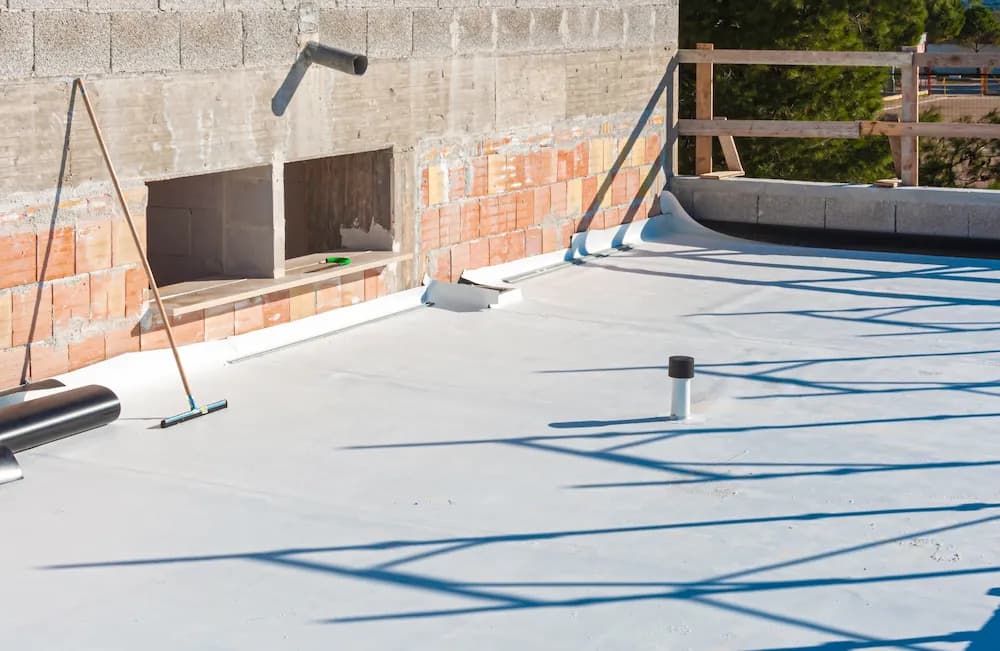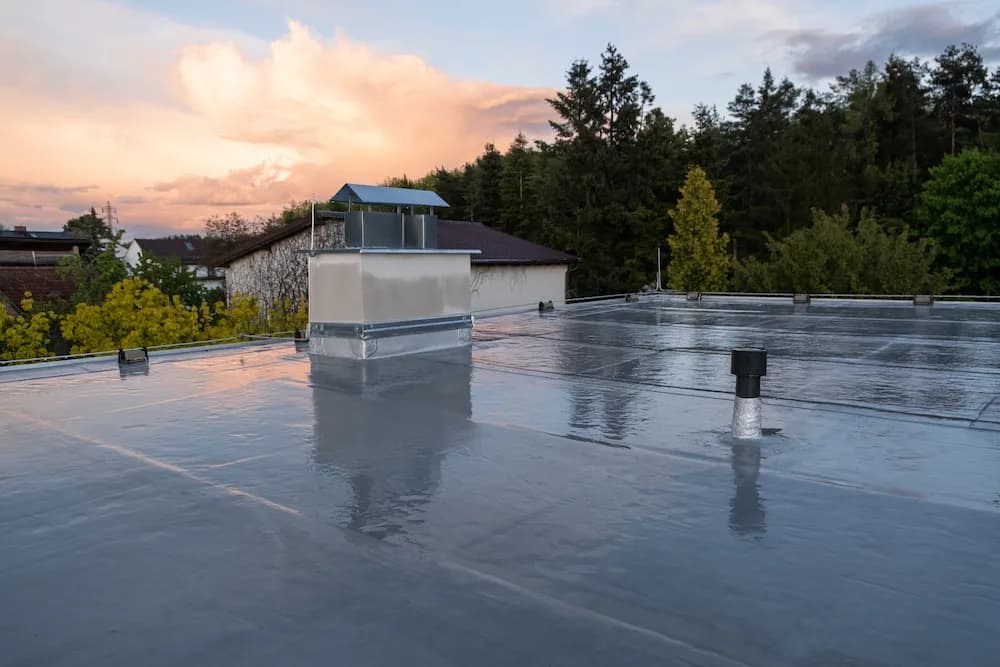
Industrial roof waterproofing with PVC or TPO is one of the most common ways to stop leaks in warehouses, logistics hubs, and low-slope commercial buildings. When the right system is selected and the details are executed properly, you get a watertight roof that’s easy to maintain and repair.
When does PVC/TPO make sense for an industrial roof?
It’s typically a strong option when:
- Leaks keep coming back and you need a reliable refurbishment.
- The roof has many penetrations and upstands (parapets, skylights, HVAC, pipework).
- You want a lightweight system.
- You need a weldable membrane that can be reworked in the future.
In operational facilities, the biggest advantage is phasing the works to avoid shutting down the site.
PVC vs TPO: practical differences
Both are thermoplastic, heat-welded single-ply membranes, but there are useful distinctions:
- PVC: widely used, lots of accessories and prefabricated details available; excellent weldability. In refurbishments, it performs very well when incompatibilities with existing layers are properly separated.
- TPO: often chosen for stability and formulations without plasticizers; good performance on fully exposed roofs and projects targeting specific environmental requirements.
The best choice depends on the existing build-up, exposure, detailing needs, and material compatibility.
Common installation methods (and how to choose)
On industrial roofs, the most typical approaches are:
- Mechanically fastened: the membrane is anchored to the deck/structure and overlaps are heat-welded. Fast and ideal for large areas.
- Fully or partially adhered: useful to manage wind uplift in specific zones and for certain substrates.
- Ballasted: less common on industrial buildings due to weight and detailing, but possible in specific cases.
Critical details where most leaks start
Even with a great membrane, failures usually come from details:
- Drains and gutters: poor integration, missing reinforcement, inadequate falls, or chronic blockage.
- Parapets and perimeter terminations: insufficient upstand height, coping without drip edge, poorly fixed termination bars.
- Skylights and smoke vents: weak transitions, movement, cracking at kerbs.
- Service penetrations (pipes, supports, lifelines): missing compatible sleeves or “sealant-only” fixes without a proper system.
- Structural expansion joints: if not treated with dedicated components, they open up with movement.
How to plan a refurbishment without surprises
Before committing to PVC/TPO, it helps to follow this sequence:
- Inspection and diagnosis: identify entry points (they don’t always match interior stains) and review all details.
- Substrate assessment: trapped moisture, insulation condition, corrosion on metal decks, fastening integrity.
- Falls and drainage: ensure water doesn’t pond; redesign falls or drainage if needed.
- Compatibility checks: use separation layers where required.
- Phased work plan: split the roof into zones to keep operations running and protect sensitive areas.
Recommended maintenance (what extends service life the most)
An industrial roof needs routine care:
- Clean and check drains and after heavy rain.
- Visual inspection of welds and terminations 1–2 times per year.
- Check perimeter fixings and edge details (wind).
- Keep a maintenance log: what was repaired, where, and with which materials.
A common scenario in Madrid: shared ownership and building managers
In Madrid, many industrial or mixed-use buildings involve multiple stakeholders (units, offices, shared roofs) managed by building administrators or owner associations. Beyond the technical solution, it’s important to:
- Define scope clearly (common vs private areas).
- Plan access, safety, and working hours.
- Document the installed system for future warranties and maintenance.
Signs you should act now
- Leaks after wind or short storms (often perimeter/termination issues).
- Ponding that lasts for days (falls/drainage problem).
- Cracking around skylights or penetrations.
- Repeated “silicone fixes” that never last.
Need a proposal for your industrial roof?
At Impermyna we assess the roof’s real condition, specify the right system (PVC or TPO), and focus on the critical details (drains, parapets, skylights, penetrations) to deliver a durable refurbishment. If you’re in Madrid or Toledo, we can arrange a technical visit and a phased plan to keep disruption to a minimum.
Need help with your waterproofing project?
Our team can review your case and recommend the best long-term solution.
Request a quote