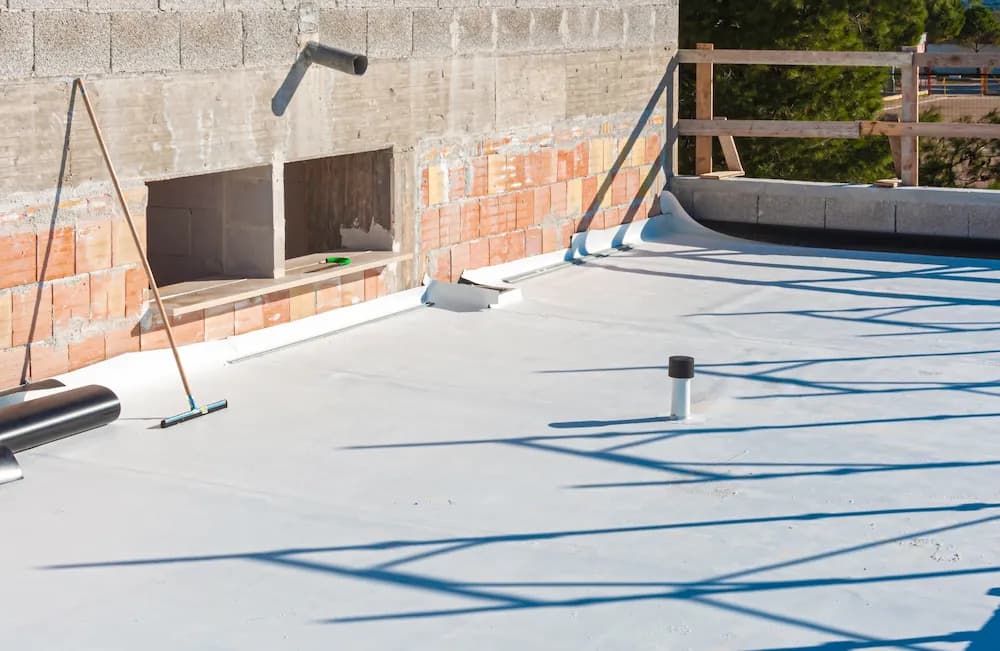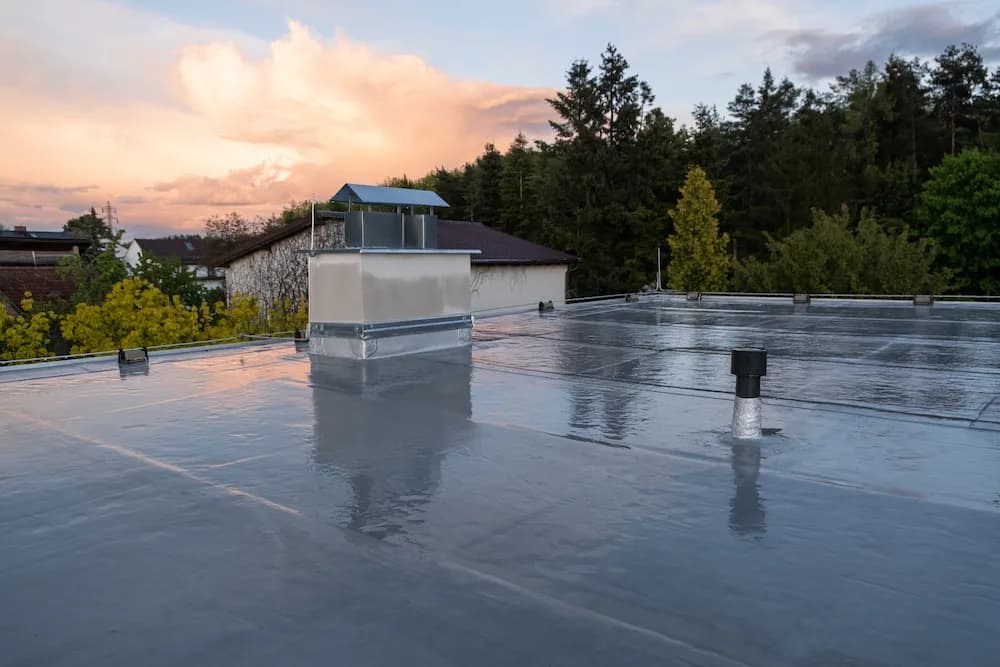
Deck roof waterproofing (an inverted roof with decking or slabs on adjustable plots/pedestals) is one of the most popular solutions for penthouses and shared rooftops—and also one of the easiest to get wrong if key details are overlooked. This guide explains how the system should be built, which membranes typically perform best, and the common mistakes that lead to leaks.
What is a deck roof (inverted roof with plots)?
A deck roof is usually a flat roof where the waterproofing layer is protected by the layers above it (insulation and the walking surface). The finish can be:
- Composite or timber decking on a support structure
- Porcelain/concrete pavers on adjustable plots (pedestals)
The main benefit is that the membrane is not directly exposed to UV or foot traffic, which can extend service life. The key requirement: water must drain properly beneath the finish.
Recommended layer build-up for a trafficable inverted roof
Exact build-ups depend on the substrate and use, but a common (bottom-to-top) approach is:
- Substrate (slab with formed falls or a screed to create slopes)
- Primer (as required by the system)
- Waterproofing membrane (e.g., SBS bituminous, EPDM, or TPO/PVC depending on the project)
- Separation/protection geotextile
- XPS insulation (often used in inverted roofs)
- Filter geotextile
- Finish: pavers on plots or decking
On deck roofs the waterproofing is “out of sight”, but it’s the most important layer: if a drain or upstand detail fails, water can travel under the surface and show up far from the real source.
Membranes: what tends to work best?
There isn’t a single “best” material; compatibility, detailing, and maintenance matter most. On deck roofs, these options often perform well:
- EPDM: excellent durability and flexibility; requires careful detailing at penetrations and upstands.
- TPO/PVC: hot-air welded seams; strong choice for large areas and complex detailing when installed by specialists.
- SBS bituminous membranes: robust and widely used; must be protected and detailed correctly at critical points.
More than the membrane itself, success depends on drainage, edge/upstand details, and puncture protection.
Critical details (where most leaks start)
Drains and outlets on flat roofs
- Drains must sit at the true low points (verify falls)
- Consider a secondary drain or overflow on shared roofs
- Use compatible clamping rings/flanges and correct sealing
- Keep access: with deck finishes, include a removable inspection panel
Upstands at parapets and walls
- Adequate membrane upturn height
- Reinforcement at corners (fillets and corner patches)
- Watertight top termination (termination bar, flashing, well-designed coping)
Door thresholds and access points
- A frequent leak point when heights are tight or detailing is poor
- Needs a dedicated threshold detail, drainage strategy, and membrane continuity
Penetrations, supports, and fixings
- Avoid puncturing the membrane to fix battens or railings
- Use ballasted supports or certified penetration details with sleeves and seals
Common deck roof mistakes
- Placing plots/battens directly on the membrane without a protection layer
- No access to drains: when they clog, water ponds and finds weak points
- Insufficient falls: “almost flat” is not a slope
- Mixing incompatible materials (some sealants can attack certain membranes)
- Ignoring movement at joints and edges: roofs expand/contract with temperature
Signs your deck roof may be failing
- Damp patches on the ceiling below or at façade junctions
- Persistent musty smell after rainfall
- Hidden ponding beneath the finish (often noticed when walking or via an inspection opening)
- Efflorescence or staining on parapets and party walls
Madrid and homeowners’ associations: what to require
In Madrid, many homeowners’ associations upgrade rooftops to make them trafficable or refurbish penthouse terraces with decking. Before installing—or when repairing—ask for:
- Clear detailing for critical points (drains, parapets, thresholds)
- Maintenance access points for inspection and cleaning
- Written warranty and a materials specification
- A watertightness test where appropriate and included in the scope
Can it be repaired without removing all the decking or pavers?
Sometimes—if the issue is truly local (for example, a poorly detailed drain or a specific upstand). But on deck roofs, water can migrate under the surface, and “blind” patching often becomes temporary. A typical approach is:
- Open targeted inspection areas for diagnosis
- Identify the failing detail
- Repair with a compatible system and reinstate the finish
Conclusion
Long-lasting deck roof waterproofing relies on the right membrane, but even more on falls, drainage, protection layers, and correct terminations. If you’re seeing leaks—or planning a deck roof build-up—treat it as a complete system.
If you’re in Madrid or Toledo and need a deck roof inspection, Impermyna can help you pinpoint the source of the leak and propose a warranted solution.
Need help with your waterproofing project?
Our team can review your case and recommend the best long-term solution.
Request a quote