Guides
Cementitious waterproofing: when to use flexible vs crystalline cementitious membranes and how to apply them correctly
Impermyna7 min read
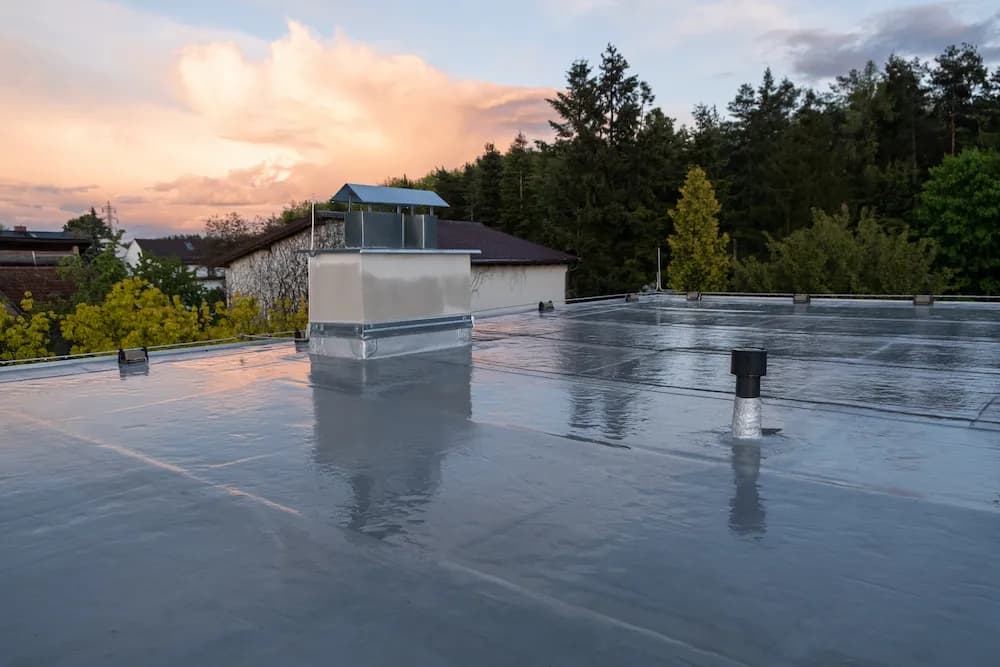
Cementitious waterproofing (flexible cementitious membranes or crystalline/osmotic cementitious coatings) is a go-to solution when you need compatibility with mineral substrates and ceramic finishes. It also fails often—not because of the product, but because of poor prep and weak detailing.
This guide explains when to use a cementitious membrane, how to choose between flexible vs crystalline systems, and how to apply them to prevent leaks.
What cementitious waterproofing is (and the main types)
Cementitious waterproofing is a cement-based coating with additives that, once cured, reduces or blocks water penetration.
Common types:
- Flexible cementitious membrane (two-component): cementitious mix + polymer. Bridges microcracks and tolerates small movements.
- Rigid / crystalline (osmotic) cementitious coating: reacts with moisture to form crystals that block capillaries in concrete/mortar. Not elastic.
Quick rule: if you expect movement or cracking, flexible cementitious is usually the safer pick; if the concrete is stable and you want to densify/seal the substrate (even with some moisture), crystalline may fit.
When to choose a flexible cementitious membrane
It’s typically a strong option for:
- Bathrooms and showers under tile (with reinforcement tape at junctions).
- Terraces and balconies under screed/tile when the substrate is mineral and the system will be protected.
- Interior wet areas (laundry/utility rooms) where you want tile-adhesive compatibility.
Benefits:
- Excellent adhesion to mortar/concrete.
- Suitable to receive cement-based tile adhesives.
- Better microcrack-bridging than rigid cementitious coatings.
Typical limitations:
- It’s not “paint”: it needs thickness and proper curing.
- Outdoors, it must be part of a full system (falls, drains, joints, protection) to last.
When to choose crystalline (osmotic) cementitious waterproofing
It’s especially suitable for:
- Concrete water tanks, cisterns, and reservoirs (only if certified for the intended water contact/use).
- Concrete walls and slabs where you want to reduce permeability from the accessible side.
- Mineral substrates where crystal growth can help “seal from within”.
Benefits:
- Can perform well on slightly damp substrates (manufacturer-dependent).
- Works within the substrate, not only on the surface.
Limitations:
- It won’t bridge active cracks: if the crack moves, the leak path can return.
- Requires a mineral substrate (not for paint, gypsum, or non-cementitious surfaces).
Where failures usually happen: critical details
Most leaks come from details, not the open field:
- Floor-to-wall junctions (no fillet or reinforcement tape).
- Drains and scuppers (no compatible drain detail, no reinforcement, broken continuity).
- Pipe penetrations (missing collars, elastic seals, reinforcement).
- Movement joints (must remain joints—don’t just “cover” them with cementitious slurry).
- Poor substrate prep (dust, laitance, loose areas, contamination).
Substrate preparation (what makes or breaks the job)
Before application:
- Remove weak material, paints, gypsum, loose salts.
- Patch honeycombs/voids with a suitable repair mortar.
- Soften sharp edges and create a coving/fillet at corners if required.
- Form proper falls outdoors (ponding increases risk).
- Use a primer/bonding bridge if the system requires it.
If the substrate is dusty or friable, the membrane can debond even if the product is high quality.
How to apply cementitious membranes (step by step)
General workflow (always follow the technical datasheet):
-
- First coat (brush/trowel) to key into the substrate.
-
- Reinforcement: install elastic tape at junctions; reinforce drains and penetrations.
-
- Second cross coat to ensure continuity and required thickness.
-
- Curing: prevent rapid drying from sun/wind; respect curing times.
-
- Water test when applicable (e.g., showers/terraces before tiling).
-
- Protection/finish: tile adhesive + tile, protective screed, etc.
Common mistakes:
- Applying too thin (not meeting coverage/thickness).
- Ignoring recoat windows.
- Skipping tapes/collars at details.
- Tiling too soon and trapping moisture before cure.
Compatibility with tiles, adhesives, and joints
In bathrooms and terraces, a typical build-up is:
- Flexible cementitious membrane + compatible cement-based tile adhesive.
- Cementitious or epoxy grout depending on exposure (high-use showers often benefit from epoxy).
Watch out for:
- Structural joints: keep them as joints and treat them with elastic joint systems.
- Mixed substrates (mortar + metal + timber): cementitious systems are not universal.
Madrid and homeowners’ associations: where it often makes sense
In Madrid, terrace refurbishments and wet-area repairs in apartment buildings are common, and many substrates are concrete/mortar where cementitious systems can be practical—especially when you want a tile-ready waterproof layer. For homeowners’ associations, it’s important to define in writing:
- Scope (drains, upstands, junctions, joints).
- Water testing and acceptance criteria.
- Warranty and maintenance expectations.
When it’s NOT the best option
Consider other systems if:
- The surface will be fully exposed with significant thermal movement (synthetic membranes, polyurethane/polyurea, etc. may be more suitable).
- There are active cracks or significant movement you can’t properly treat.
- The substrate is non-mineral or heavily degraded.
Quick checklist before you decide
- Sound mineral substrate and proper prep?
- Any movement joints—and how will they be detailed?
- Drains and junctions defined with compatible components?
- Will thickness, coats, and curing be respected?
Cementitious waterproofing works best when it’s designed as a system, not as “one coat”.
Need help choosing the right system?
If you’re considering cementitious waterproofing in Madrid or Toledo (bathroom, terrace, tank, or a shared building area), we can assess the substrate, the critical details, and propose the safest specification for your case.
- #cementitious waterproofing
- #flexible cementitious membrane
- #crystalline waterproofing
- #bathrooms
- #terraces
- #water tanks