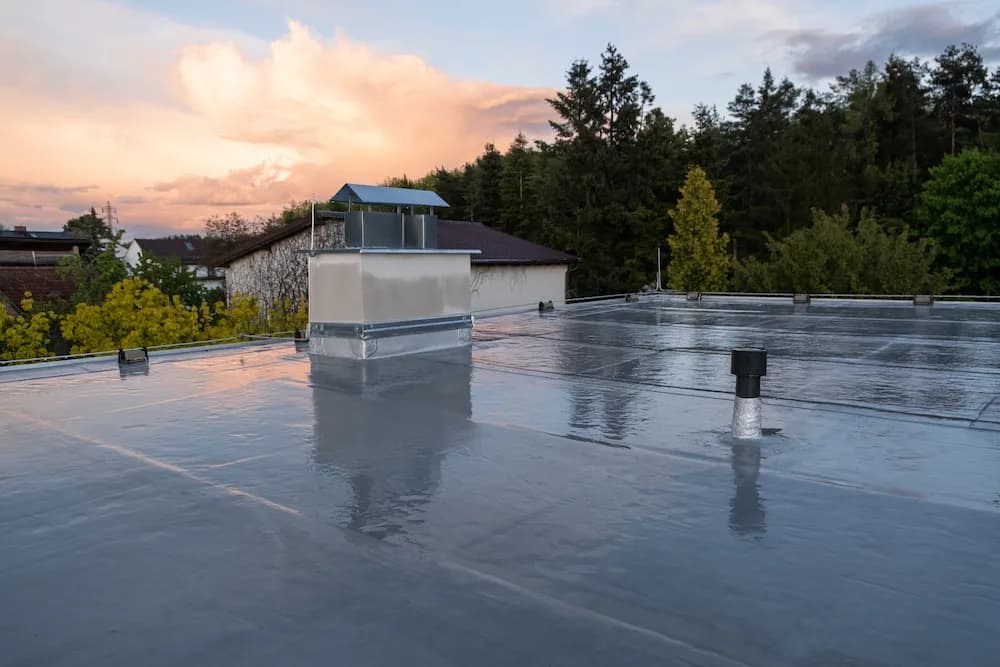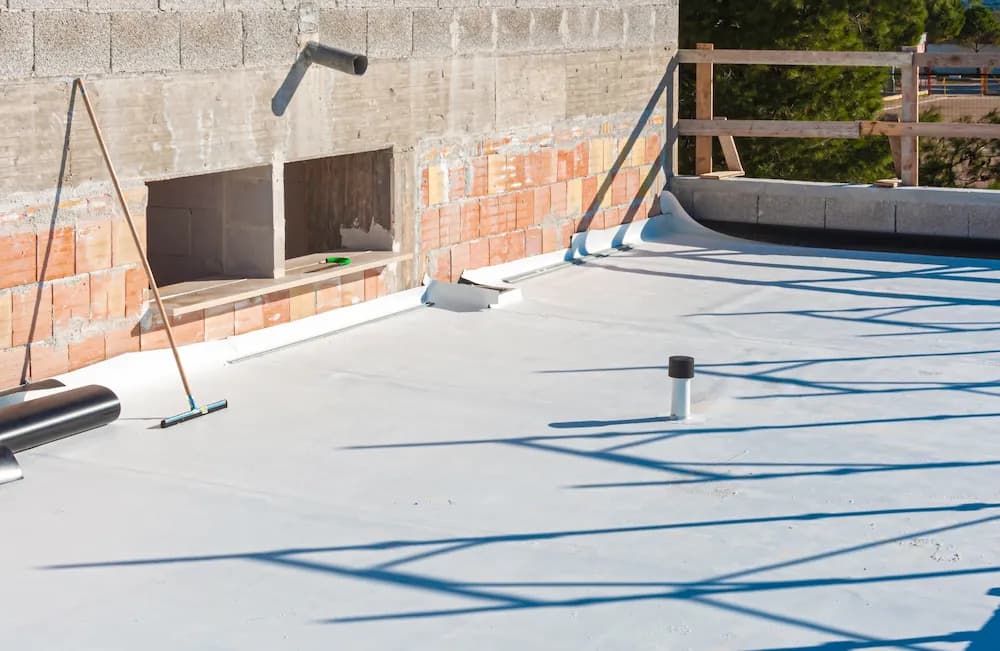
Planter and green roof waterproofing is one of the most common sources of recurring leaks on terraces and rooftops: water sits for long periods, roots search for weak points, and drains clog. When a planter sits above a home or parking area, a small defect can quickly turn into persistent water ingress.
Why planters leak: the usual causes
- No slope or poor drainage: water ponds and stresses joints and upstands.
- Undersized drains or no overflow: once clogged, water rises above the designed level.
- Membrane not root-resistant or missing a root barrier.
- Bad detailing at upstands, outlets, corners, and penetrations.
- No mechanical protection: gravel, tools, or roots puncture the membrane.
In multi-family buildings, “decorative” planters are often built like oversized pots, but they actually behave like a small roof: they need a complete system, not just a coat of waterproof paint.
Recommended build-up: layers of a properly waterproofed planter
The goal is watertightness plus root resistance and reliable water evacuation.
- Substrate (concrete/masonry) repaired and smoothed
- Falls/slope formation toward the outlet (when applicable)
- Primer compatible with the system
- Waterproofing membrane (case-dependent)
- Root barrier (if not integrated in the membrane)
- Protection layer (geotextile/mechanical protection)
- Drainage layer (drainage board or draining gravel + filter geotextile)
- Growing medium and planting
Which membrane to choose (and when)
There’s no single best product—access, geometry, and detailing drive the choice.
- Synthetic membranes with root-resistance certification (e.g., some PVC/TPO): strong option for green roofs thanks to continuous welded seams.
- Liquid-applied systems (PU/PMMA) with reinforcement: useful for complex shapes and many upstands, always with proper protection and a root barrier when required.
- Root-resistant bituminous membranes: common in traditional planters/green roofs, with careful laps and terminations.
The deciding factor is rarely the label—it’s the details and protection against puncture and roots.
Critical details (where leaks usually start)
Outlets, overflows, and drainage
- Use a serviceable outlet that can be accessed and cleaned.
- Add an overflow (scupper) at a safe level to prevent flooding if the drain blocks.
- Keep soil away from the outlet using grates and filter geotextile.
Upstands and walls
- Turn the membrane up the wall to the required height and terminate with a termination bar/profile and compatible sealant.
- Reinforce corners with preformed pieces or reinforced bands.
Penetrations
- Use prefabricated collars/sleeves where possible.
- Avoid late penetrations without proper waterproof detailing.
Can you waterproof a planter without removing everything?
Sometimes, but there are limits:
- If the membrane is buried under soil with no inspection points, you typically need to remove the growing medium to do it correctly.
- Patch repairs only work when you can identify the failure point and rebuild the outlet/upstands properly.
If there’s a leak, “sealing the inside” of the planter is rarely enough: water often enters at outlets or junctions and travels underneath.
Maintenance: what keeps it leak-free
- Clean drains and check overflows (at least twice a year).
- Inspect after heavy rainfall.
- Manage roots and avoid invasive planting.
- Don’t drill or fix items (stakes, railings, irrigation) without waterproof detailing.
A common scenario: rooftop planters in shared buildings
In refurbishment projects, many planters sit on older slabs with multiple patches and compromised outlets. A full upgrade—drainage, overflow, and continuous waterproofing with correct terminations—usually reduces incidents and prevents repeated damage claims between neighbors.
Need help with a leaking planter or green roof?
If you’re seeing damp patches, peeling paint, or leaks below a planter, Impermyna can assess the build-up, propose the right system, and execute the critical details with warranty. Get in touch and we’ll review it with you.
Need help with your waterproofing project?
Our team can review your case and recommend the best long-term solution.
Request a quote