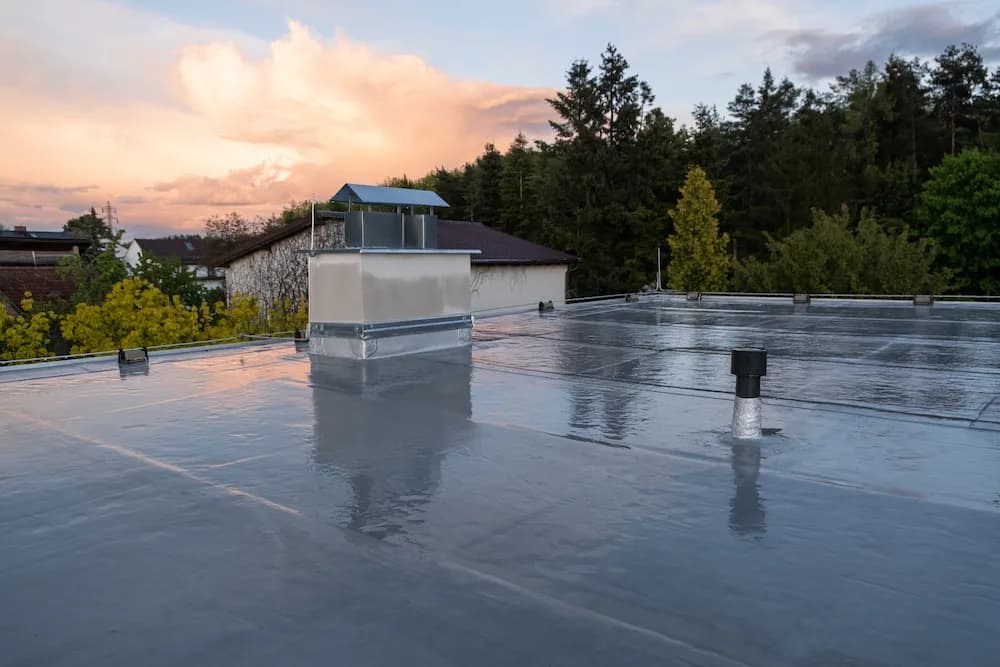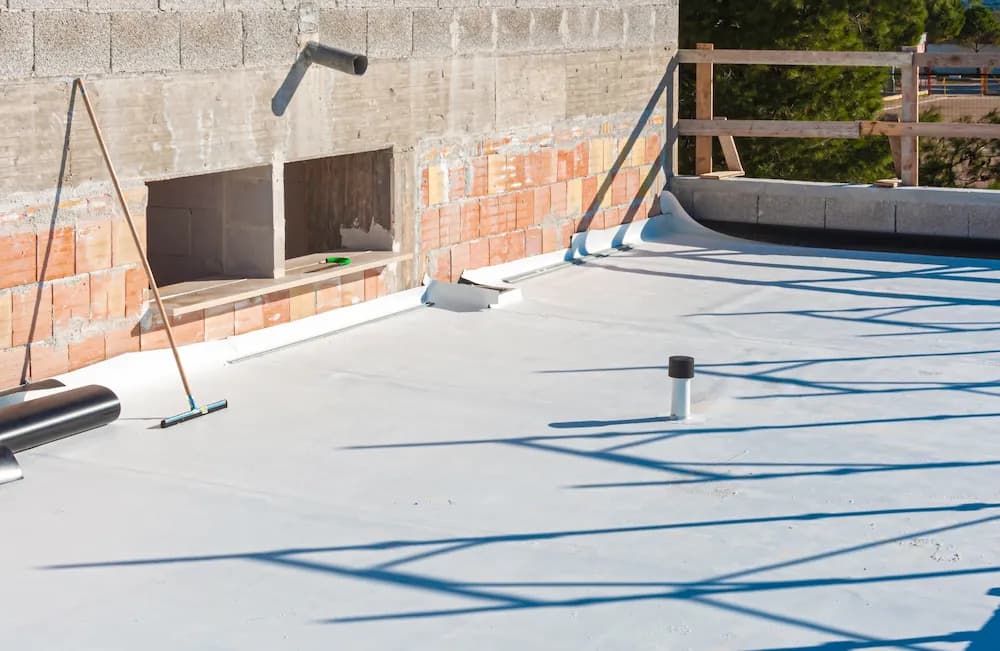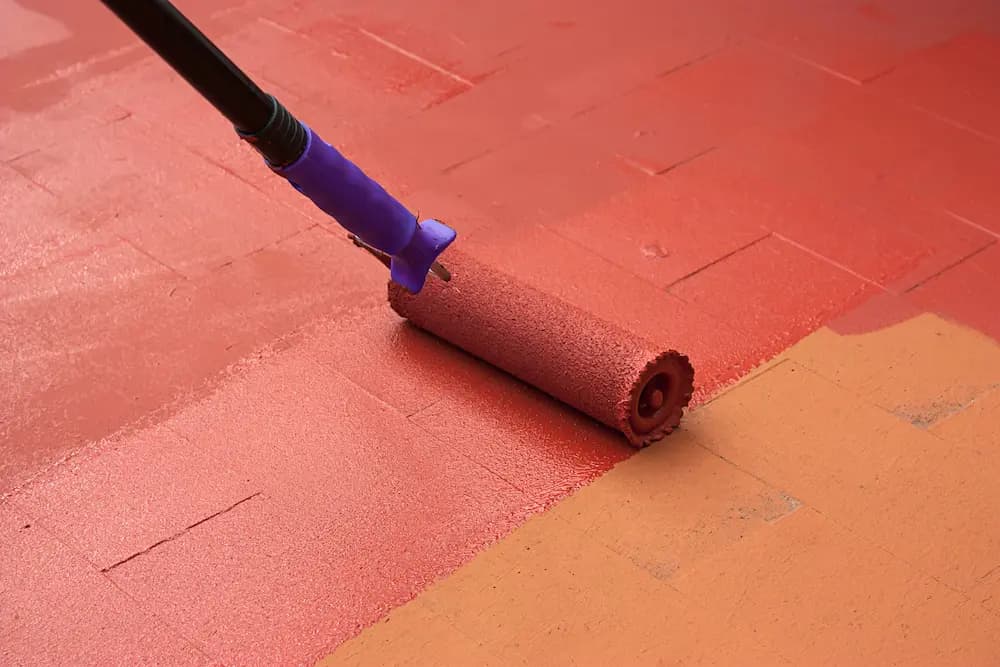
Choosing waterproofing for flat roofs and terraces often comes down to one question: EPDM, TPO/PVC, or an asphalt (bituminous) membrane. There isn’t a single “best” option—what works depends on the substrate, whether the area is walkable, the number of details, and the budget.
Quick differences: EPDM, TPO/PVC and asphalt membranes
- EPDM: a synthetic rubber sheet. Typically fully adhered or ballasted, with sealed seams.
- TPO/PVC: thermoplastic sheets. Seams are heat-welded, enabling very clean detailing.
- Asphalt membrane (bituminous): a traditional system, often 1–2 layers, torch-applied or self-adhered.
In practice, leaks are more often caused by drains, upstands/parapets, joints, and penetrations than by the sheet itself.
EPDM: when it’s a good fit
Pros
- Excellent elasticity and tolerance to movement.
- Strong long-term performance when properly installed.
- Fewer seams if large sheets are used.
Watch-outs
- Adhesives and detailing matter: bonding and seam work must be done correctly.
- For walkable areas you’ll need a build-up (protection, pavers, etc.).
Best for
- Non-walkable flat roofs, or roofs with protective layers.
- Refurbishments where minimizing seams is beneficial.
TPO/PVC: welded seams and technical detailing
Pros
- Heat-welded seams can be extremely watertight when executed well.
- Great control around complex details (drains, corners, parapets).
- Can pair well with reflective/energy-focused roof solutions (product-dependent).
Watch-outs
- Requires trained installers and proper weld testing/inspection.
- Chemical compatibility with some substrates/insulations (usually solved with separation layers).
Best for
- Roofs with many penetrations, HVAC equipment, or intricate junctions.
- Projects where a highly controlled, “technical” finish is desired.
Asphalt (bituminous) membrane: classic and reliable when done right
Pros
- Widely available and well understood.
- Performs well in refurbishment when the substrate is properly prepared.
- Options for multi-layer systems and mineral-finished capsheets.
Watch-outs
- More overlaps and seams: workmanship is critical.
- Needs protection against puncture in used/walkable areas.
- Torch application must be done safely and correctly.
Best for
- Terraces and roofs where you’re rebuilding slopes, drains, and protective layers.
- Owners who want a proven, robust system with clear layer-by-layer control.
Practical comparison: service life, maintenance and cost
- Service life (indicative): all three can last a long time with correct design and installation. Always ask about warranty and maintenance requirements.
- Maintenance: for any system, check drains, seams, upstands and penetrations at least once a year.
- Cost: depends heavily on access, substrate condition, insulation needs, protection (pavers/gravel), and detailing complexity. Don’t compare only “€/m² of membrane”.
Decision drivers: walkable terrace, insulation and drainage slopes
Before choosing, clarify:
- Is it a walkable terrace or a technical roof?
- Do you need to rebuild slopes or replace drains?
- Will you add thermal insulation (warm roof/inverted roof build-up)?
- How many details are there (low parapets, skylights, AC units, pipe penetrations)?
A common scenario in Madrid: homeowners’ associations
In Madrid, many homeowners’ associations call after years of patch repairs: cracked parapets, clogged drains, and poorly resolved junctions. In these cases, the deciding factors are usually:
- Correcting drainage and slopes.
- Proper parapet and edge detailing.
- Selecting a system that matches the use (walkable vs non-walkable) with the right protective build-up.
Frequent mistakes (and how to avoid them)
- Choosing on price without defining details: request a scope that lists critical junctions.
- Skipping protection on walkable areas.
- Poor coordination between waterproofing and masonry (slopes, drains, thresholds).
- No inspection plan: an annual drain clean-out prevents many incidents.
What we recommend at Impermyna
If you’re deciding between EPDM, TPO/PVC or asphalt membranes, the fastest way to get it right is a site inspection and a side-by-side proposal covering:
- Substrate condition and existing defects.
- Drainage/slope solution.
- Construction details and warranty.
If you’re in Madrid or Toledo, we can help you choose the most suitable system for your roof or terrace and execute it with professional-grade detailing.
Need help with your waterproofing project?
Our team can review your case and recommend the best long-term solution.
Request a quote