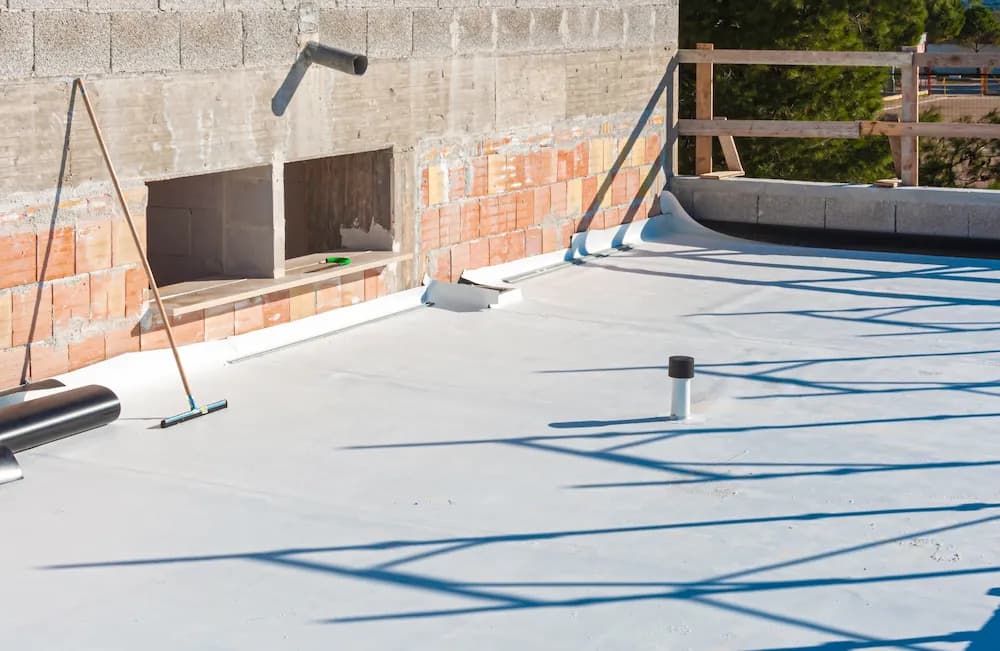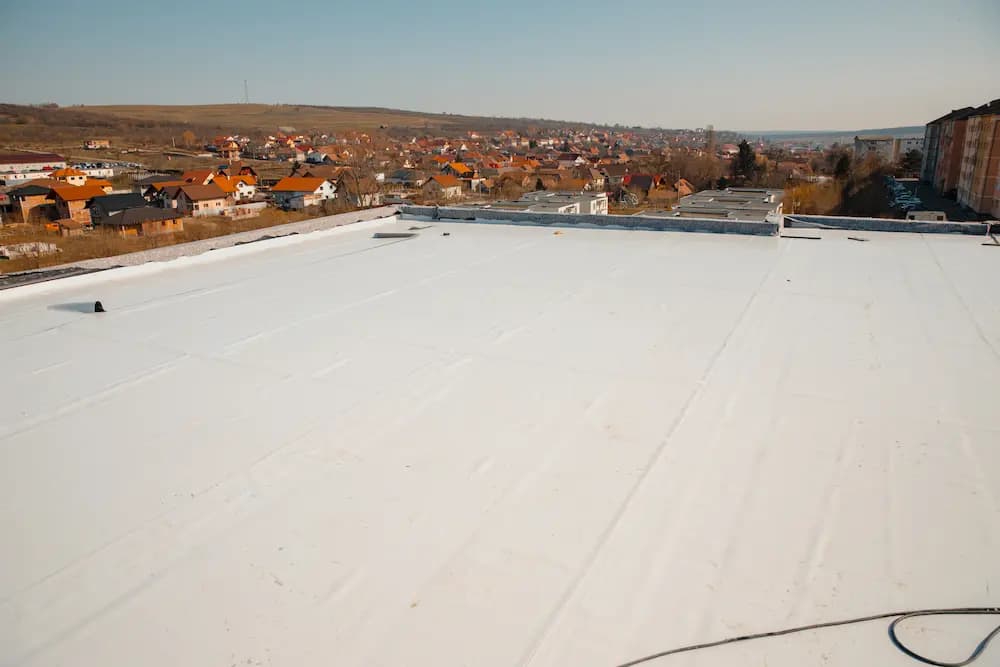
A reflective waterproof coating (often referred to as a cool roof) is a solution that combines waterproofing with heat reduction on sun-exposed roofs. When properly specified and applied, it can lower overheating in summer and help extend the roof’s service life.
What a cool roof is (and why it works)
A cool roof is a roof with high solar reflectance and high thermal emittance. In practice, it:
- Reflects more solar radiation (so it heats up less).
- Releases stored heat more effectively.
This can mean better comfort for top-floor homes, reduced cooling demand, and fewer expansion/contraction stresses on the substrate.
When a reflective waterproof coating makes sense
It’s usually a good fit when one or more of the following apply:
- A flat roof (or maintenance-access roof) with strong sun exposure.
- An aging but stable waterproofing layer where you want to renew protection without major works.
- Buildings where the top floor suffers from summer heat.
- HOAs looking for an upgrade that improves comfort and maintenance.
Key point: it’s not “just paint.” The outcome depends on substrate condition and system compatibility.
Substrate requirements: what to check first
Before recommending a reflective system, you should verify:
- Falls and drainage: if ponding is present, it must be corrected or the system must be suitable.
- Condition of existing waterproofing: cracks, blisters, debonding, joints, and transitions.
- Adhesion and cohesion of the substrate (concrete, screed, membrane, previous coating).
- Details: parapets, drains, penetrations, expansion joints.
Choosing the right reflective system (what to look for in data sheets)
You’ll find different chemistries (acrylic, polyurethane, hybrids). More than the brand, what matters is that the system:
- Is watertight and sufficiently elastic for microcracking.
- Has strong UV/weather resistance.
- States solar reflectance (SR) and ideally SRI.
- Is compatible with the substrate (with the right primer if required).
Proper application (typical steps)
A professional application typically includes:
- Thorough cleaning (and algae/mold treatment if needed).
- Crack repairs and reinforcements at details and transitions.
- Priming where specified.
- 2+ coats to reach the total consumption required.
- Checks on thickness, curing times, and final detailing.
Benefits and limits: realistic expectations
Benefits
- Lower surface temperatures on sunny days.
- Extra protection against UV-driven aging.
- Fast renewal for maintenance-access roofs.
Limits
- Not a substitute for full refurbishment when there are major failures (widespread debonding, chronic ponding, serious detailing defects).
- Needs maintenance: cleaning and periodic inspections to keep reflectivity.
- Performance depends heavily on preparation and detailing.
Why it’s especially relevant for HOAs
For many homeowners associations, reflective waterproof coatings can be a practical way to reduce recurring issues (microcracks, UV degradation) and improve comfort—provided the roof is a suitable candidate and details are properly addressed.
Signs it’s NOT the right option (or another solution is needed)
- Active leaks with an unclear source.
- Widespread blistering or loss of adhesion.
- Persistent ponding.
- Poorly resolved details (parapets/drains) requiring construction work.
Quick decision checklist
- Does the roof drain correctly?
- Are cracks active or movement-related?
- Is the substrate dry and stable?
- Are all critical details properly reinforced?
- Does the system provide reflectance and UV-resistance data?
If you’d like, Impermyna can assess your roof and recommend the most suitable approach—reflective or otherwise—with a clear scope for repairs and ongoing maintenance.
Need help with your waterproofing project?
Our team can review your case and recommend the best long-term solution.
Request a quote